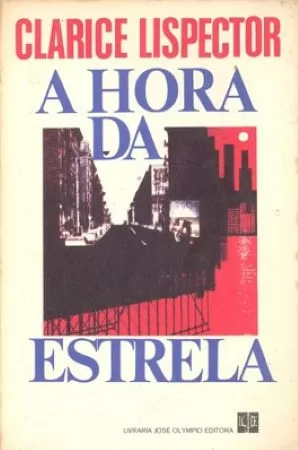
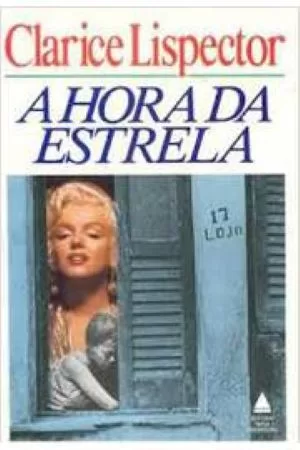
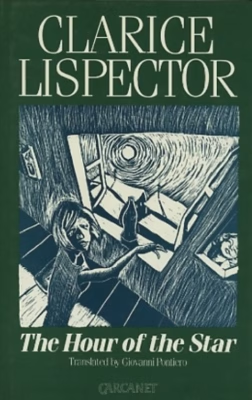
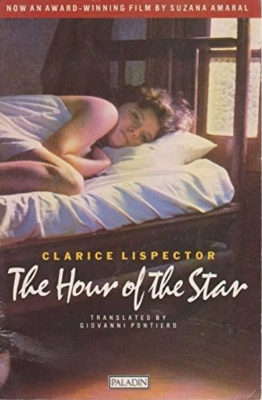
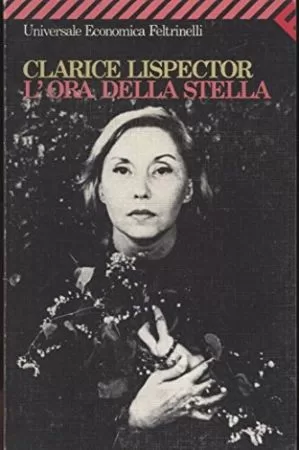
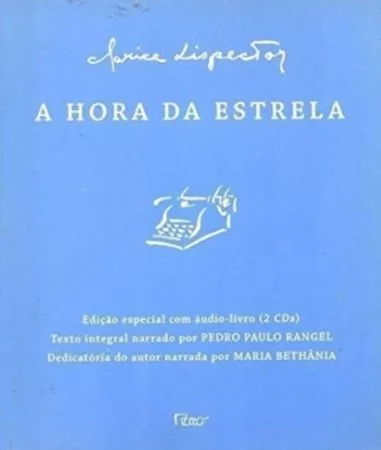
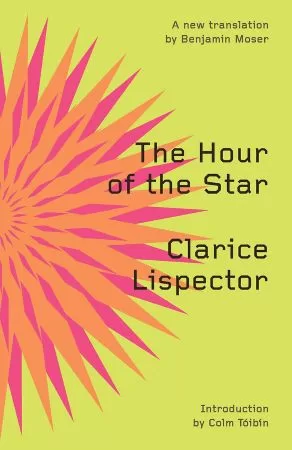
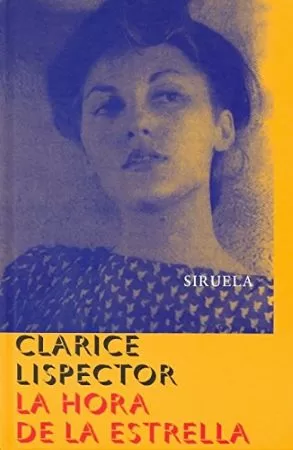
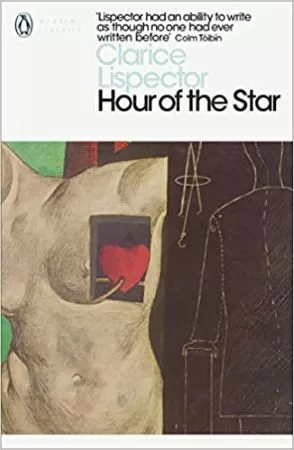
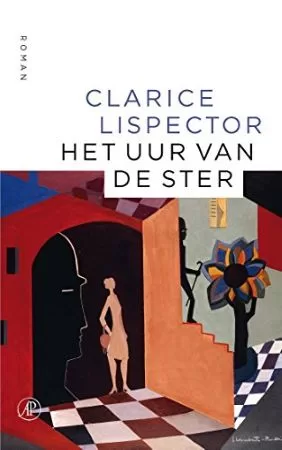
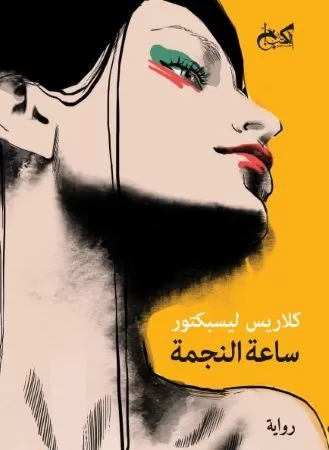
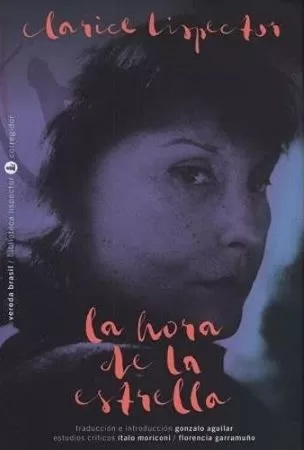
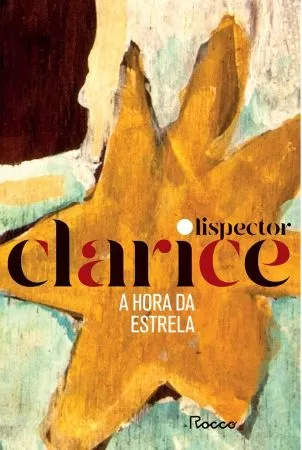
LISPECTOR, Clarice. A hora da estrela. Rio de Janeiro: Livraria José Olympio, 1977.
Cristiane Côrtes
Translated by Laila Talukder
Illustrated by Léo Tavares
Clarice Lispector was born in Ukraine in 1920, but her family moved to Brazil shortly afterwards. She spent her early childhood in the city of Recife. In 1935, she moved to Rio de Janeiro, where she attended Law School. She lived abroad for over a decade, however, after separating from her husband, she moved back to Rio de Janeiro. There, she died from ovarian cancer in 1977. It was only in the early 1940s that her life became dedicated to literary writing, although she had written her first text a decade earlier. Her debut novel Perto do coração selvagem [Near to the Wild Heart,Penguin Classics, translated by Alison Entrekin in 2014] was first published in 1943 and paved the way for postmodernism in Brazil. Her writing was dense and unsettling in a world still recovering from the traumatic experiences of two wars in half a century. Indeed, in Brazil, transformations in the social and political landscape had a considerable influence on written works. Literature transformed alongside the evolving landscape of the period, such as the end of the Vargas era, the rise and fall of populism, and the military dictatorship.
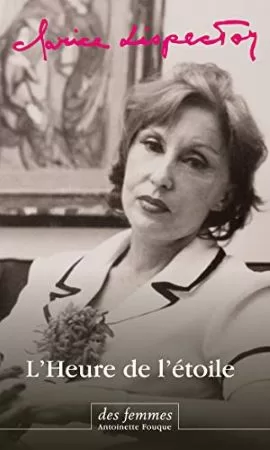
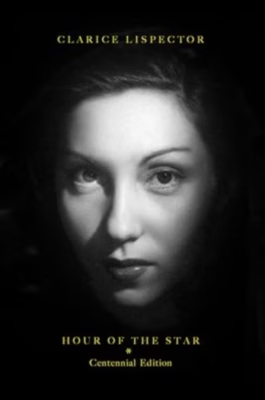
A hora da estrela (The Hour of the Star, Penguin Classics, translated by Benjamin Moser) is one of Clarice Lispector’s most famous books. The short intricate novel tells the story of Macabéa, a typist from Alagoas state, and her author, Rodrigo S.M. It is he who assumes the role of narrating the woman’s dull and impoverished daily life. Metalanguage is one of the most striking aspects of this profound yet compact novel as the fictional author becomes part of the plot, crafting his writing in real time. Published in 1977, the same year the author died, the text was adapted into a highly acclaimed film in 1985 by Suzana Amaral.
This compelling and intimate novel begins with Rodrigo S.M.’s explanation of his desire to tell the story of a woman from the Northeast of Brazil who he spots on the street one day. The account appears to be about Macabéa’s sad and lonely life, but the plot also reveals a self-centred narrator and his difficulty in grasping the essence of her character. The work contains two stories within the same plot, with Macabéa’s life at the forefront. She is an orphaned woman from the Northeast, raised by her authoritarian aunt, who migrates to Rio de Janeiro in search of better working conditions. Although she cannot read or write well, her typing course lands her a job at an accounting firm. Her humble life is limited to the room she shares with four other girls, shop assistants from the Lojas Americanas department store, as well as trips to the cinema which help fuel her dream of becoming an actress.
Macabéa’s moments of pleasure are few and far between, from listening to a radio station, drinking iced coffee and Coca-Cola, to eating hot dogs. Though in love with Olímpico, her boyfriend who is also from the Northeast, she is devastated to discover that he has left her for Glória, her carioca workmate and a butcher’s daughter. Distraught by the abandonment and all the hardships in her life, Macabéa seeks out a fortune-teller, on Glória’s advice, to find happiness. Madame Carlota lays out all the sadness and loneliness that consumes the protagonist. However, she also makes her believe that something wonderful will happen and that the poor Northeastern woman’s life will take a surprising turn. Faced with dazzling new possibilities, Macabéa experiences a moment of ecstasy, the pinnacle of an epiphany typical of Lispector’s writing. This is abruptly interrupted when she is hit by a car. In the glare of a yellow Mercedes’s headlights, Macabéa’s time comes, and she dies sprawled on the pavement, at last catching the attention of passersby.
Running parallel to the narrative about Macabéa is Rodrigo S.M.’s story and his dilemma about his character who, in his own words, has nothing to offer him. This results in a chaotic discourse that reveals the setbacks an author faces given the impossibility and complexity of representation in the literary text. The protagonist’s silence is an aspect of the novel that causes deep unease for both the narrator and the readers. Against the backdrop of a character-narrator figure, the novel presents the tension of a contradictory otherness whereby the fictionalised author believes in the possibility of saving his character from anonymity. However, what the reader encounters is a story centred on this author and his struggles regarding the impossibility of writing about an experience of which he knows little: the life of a woman and her bleak existence. This ultimately reveals his own misery: “I’m writing in this instant with a bit of previous modesty because I’m invading you with such an exterior and explicit narrative. Out of which however blood so pantingly full of life might ooze and congeal into cubes of trembling jelly. Will this story someday become my own congealing? How do I know?”
Rodrigo’s relationship with Macabéa is that of a creator and his creation, his object of study, his escape. It is a reason to produce work with a social slant, a narrative that provokes the same discomfort that it portrays: “What I write is more than mere invention; it is my obligation to tell you about this one girl out of the thousands like her. And my duty, however artlessly, to reveal her life.” The narrator notes that the story is accompanied from start to finish by a slight toothache, “something to do with chipped enamel”, which highlights the conflict already foreshadowed between the experience of poverty and fictionalised poverty.
Rodrigo admits to a certain detachment from his subject and the strategies he employs to grasp it: “this story will be the result of a gradual vision”; “What I plan to tell seems easy and accessible to everyone. But its elaboration is very difficult. Since I have to make clear something that’s almost erased and that I can hardly see.” This gradual vision and modesty are set within a game where, under the pretext of speaking about another subject, the conflict of the intellectual who wonders whether poverty can be represented is brought to light. Clarice Lispector reveals her mastery by creating a character-author whose metalinguistic discourse lays bare the implications that the very act of literary creation reveals. This choice of a man belonging to a cultural elite is no accident. As the narrator notes from the very first pages: “Moreover—I realize now—nobody would miss me either. And even what I’m writing somebody else could write. A male writer, that is, because a woman would make it all weepy and maudlin.” The metalinguistic narrative centred on the character Rodrigo exposes the authority attributed to the male gender in the literary sphere. The ‘necessity’ of having a male narrator unmasks a tradition in which women have no place.
Another key method supporting this view is the description of characters, whereby a male narrator lifts the veil on the traditional novel and exposes the speaker’s inherent power: “The story—I determine with false free will—will have around seven characters, and I’m obviously one of the more important. I, Rodrigo S.M.. An old tale, this, since I don’t want to be all modern and invent trendy words to make myself look original.” Rodrigo does not dwell on the other characters, in this introduction nor at any other point in the narrative. This is because “the subject of the novel is the very act of writing the novel” (Gotlib, 2001), which, ironically, features a man as the narrator for the very reasons he has already explained himself.
Clarice Lispector’s writing roots itself in a modernity whereby chaos ultimately becomes a form of language, as lived experience deteriorates. For Nunes (1989), the poetics of the author of Perto do coração selvagem (1943) [Near to the Wild Heart (2015)] move from word to silence and from silence to word in a densely metaphorical vein. As a new form of narration, it conveys human drama and reflects the inability to use words to recount experience.
In The Hour of the Star, the decision to engage with the social and regional landscape is one of the hallmarks of Lispector’s literary brilliance. Whereas regionalism was thoroughly explored in the 1930s novel and in the work of Guimarães Rosa, Lispector approaches it from a different perspective. Bringing the woman from the Northeast to the city of Rio de Janeiro and exposing all the confinement and loneliness in the major cities is a replication of the backlands in the Southeast. Macabéa’s deafening silence has the power to paralyse S.M. and show the reader the uncomfortable and troubled place of subalternity. In literature, having the capacity to aesthetically articulate an oppressed reality is to envision a better future, a situation where it is possible to glimpse ways out of oppression. Reading The Hour of the Star is worthwhile precisely because it brings the reader into contact with Clarice Lispector and all her formidable power.
Further Reading
GOTLIB, Nádia Battella (2001). Macabéa e as mil pontas de uma estrela. In: MOTA, Lourenço Dantas; JUNIOR, Benjamin Abdala (Org.). Personae: grandes personagens da literatura brasileira. São Paulo: Senac.
NUNES, Benedito (1989). O drama da linguagem: uma leitura de Clarice Lispector. São Paulo: Ática.
ABEL, Carlos Alberto (2011). A proletária Macabéa. Estudos de Literatura Brasileira Contemporânea, Brasília, n. 4, p. 1-5. Disponível em: https://periodicos.unb.br/index.php/estudos/article/view/8846. Acesso em: 25 mar. 2023.
CÔRTES, Cristiane de Araújo (2009). As pontas de uma estrela: poéticas do silêncio em Macabéa e Ponciá. 2016. Tese (Doutorado em Estudos Literários) – Faculdade de Letras, Universidade Federal de Minas Gerais, Belo Horizonte. Disponível em: https://repositorio.ufmg.br/bitstream/1843/LETR-ATBPKJ/1/tese_cristiane_felipe_ribeiro_de_araujo_c_rtes.pdf. Acesso em: 25 mar. 2023.
LOPES, Luiz Carlos Gonçalves (2013). Formas da alegria: resíduos do trágico em Clarice Lispector. Tese (Doutorado em Literatura Comparada) – Universidade Federal de Minas Gerais, Belo Horizonte.
SÁ, Lúcia (2011). A hora da estrela e o mal-estar das elites. Estudos de Literatura Brasileira Contemporânea, Brasília, n. 23, p. 49-65. Disponível em: https://periodicos.unb.br/index.php/estudos/article/view/8990. Acesso em: 25 mar. 2023.
INSTITUTO MOREIRA SALES [s.d.]. Notas de A hora da estrela. Disponível em: https://site.claricelispector.ims.com.br/acervo/notas-de-a-hora-da-estrela/. Acesso em: 25 mar. 2023.
Iconography