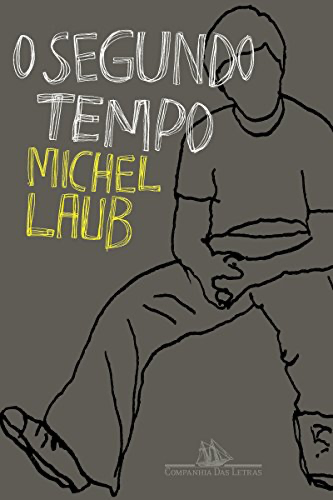
Laub, Michel. O segundo tempo. São Paulo: Companhia das Letras, 2006
Amanda Lacerda de Lacerda
Translated by: Haniya Semnani
Illustration: Espírito Objeto
“Nowadays football is dead, and I doubt anyone still cries for it, but it was not like this on the 12th of February 1989.” That exact date marked a decisive day for Grêmio and Internacional fans (two teams in the Brazilian football league; the two biggest teams in Porto Alegre, the capital of Rio Grande do Sul state), supporting the two rival teams from the southern Brazilian city of Porto Alegre who were fighting for a spot in that year’s Campeonato Brasileiro league (The Brazilian football league, an equivalent to the British Premier League) finals. Also known as the “Gre-Nal of the century” (colloquial term referring to a renowned and intense “derby” match played between the two local teams), this football match guides an important decision that needs to be made by the narrator of the novel O segundo tempo (The Second Half),by the writer Michel Laub (Porto Alegre, RS 1973). The blunt way in which the death of the most acclaimed sport in Brazil is pronounced sets the tone for the definitive role that the game plays in the narrator’s life and his family relationships.
The narrative unfolds from the memories of a man who, when he was fifteen years old, went to this symbolic game with his younger brother, eleven-year-old Bruno. Throughout the game, the elder brother is forced to explain to the younger one a serious piece of news, which involves their parents. His hesitation surrounding how to convey it is affected by the performance of the team on the pitch and changes gradually as the fate of his team changes. The tension around the telling of this secret acts as a hinge for the novel, joining together the points between the past and the present. The reader is made to speculate about this mysterious secret and the scale of it, while the narrator-protagonist, true to his nature, leaves clues, silences, gaps, hints spoken and unspoken, which capture the reader’s attention, creating a smooth and permanent tension.
The novel structures itself around this mirroring between the details of the pivotal football match and the future of their parents’ relationship. In order to achieve this, the narrator juxtaposes domestic scenes with the team line-up, his father’s frustrations with the significance of Lima – the previous centre forward for Grêmio – not playing, the mother’s depressed behaviour and the commotion in the football stands. At all times, the family and football structures are intertwined. Even the chapters are laid out like a football match: “First Half” and “Second Half”, with a brief break in between, entitled “…”.
Michel Laub is a Grêmio fan and has lived in São Paulo for nearly 20 years. He is a journalist and the author of eight novels, all published by Companhia das Letras. Diário da queda from 2011 is the book most acclaimed by readers and critics. It was translated into English as Diary of the Fall, by Margaret Jull Costa (Penguin, 2015). In a promotional video for Companhia das Letras, the author shares that the idea for the writing of O segundo tempo arose from the fact that he really liked football when he was young, and that emotional approach to the theme appealed to him. The writer recognises that, in Brazil, everyone is familiar with football; in other words, football is not a “new world” to people. To narrate the emotion of a goal, for example, one must consider that this event makes up part of a series of culturally shared experiences, socially constructed knowledge, much of it mediated through sports journalism. All of these pre-existing conditions presented a challenge to him in the use of language, ironically creating the need for a distancing which he sought to use, in order to avoid clichés taking over the reading experience.
The plot is simple, almost mundane, pervaded by the family environment, the marital disagreements, the brothers’ relationship, the trips to and from the stadium and their dedication to watching all their team’s matches, but only on the surface is the theme and narrative simple. The story told in this novel is full of tenderness and leaves a profound mark on the reader, who follows a narrator cornered by the role which he plays in this everyday family order. That position is a sort of gap, since he is caught between his parents and his younger brother. The narrator is driven to take on the task of telling his brother about an event—fracturing the core structure of the intimate family unit—which involves a betrayal by their father and a new set-up for the family. That gap is, in a way, the teenage years themselves—understood as a sort of interim existence—, narrated in adult life and filled with an awareness of the internal conflicts which led him to make an unexpected decision in the end, when he chooses not to go back home with his brother after the football game and, consequently, shocks their parents with his absence. The rules of this system by which the narrative is structured allude to coming-of-age novels, which, nowadays, have taken on their own characteristics, filled with brevity, hybridity and fragmentation.
The temporal detachment of this narrator, who is reminiscing, offers him the opportunity to make a re-evaluation of the past. It enables him to make a peaceful investigation into his parents’ behaviour and their reasons for it, and into how the experience of their divorce, like that of the Gre-Nal derby, all redefine the family ties and mark the start of his adult life. “You still don’t understand why the football in this story is important? Only a match like the Gre-Nal derby could leave Bruno like that. Only a match like that could show me how he reacts to loss”. This dialogue between the narrator and the reader highlights the significant role that the match plays in making his decision and how the process unfolded subjectively. The match becomes a significant moment of observation of his younger brother’s behaviour—Bruno is a loyal fan—as if the narrator can predict his ability to cope with the shock that the news he is about to impart will cause him. When helping his brother deal with the fact that Grêmio lost the game 2 – 1, after Internacional scored a last-minute goal, they both walk together through the city that is celebrating—not a celebration for the brothers, however—and the narrator can, finally, put into practice what he thinks is most reasonable to maintain their brotherly loyalty and to spare his brother’s pain, as far as is possible.
The ‘Gre-Nal do Século’ is a real-life historical reference which interweaves with a sort of memoir narrative, centred on the narrator’s experience with his younger brother. Bruno does not speak much throughout the story; he is described as a lifelong, committed Grêmio fan who likes to listen to radio programmes and football commentators. For the narrator, Bruno and their father, the sport is significant in different ways. In childhood, it plays an important role in the brothers’ relationship, which does not last into their adulthood, as we can see in the following reflection: “Normally, football leaves someone’s life little by little, as adult life commitments grow and become more complex, in a slow and almost unnoticeable process similar to what makes us become strangers to what was once alive and sparkling in the past […]”. In this passage, we can feel the disenchantment of the narrator upon describing how the passing of time casts a shadow on a relationship which, before, was full of affection. After this passage, the narrator emphasises that, for him, on the other hand, football lost its place in his life abruptly and definitively after the ‘Gre-Nal do Século’, as if reinforcing the defining and mediating role that the match played at a traumatic moment of his life.
The second half, also the title of the book, carries an ambiguity: it refers specifically to the structure of the match, divided into two parts (or ‘times’ in Portuguese), but also, metaphorically, it alludes to the narrator’s reminiscing. Now an adult, he is living through his own ‘second half’ and, therefore, he is able to process his experience from a new perspective and, through that perspective, set out to revise his past. The present time of the narrative, blurred by memory and the limited time of the ninety-minute football match from 1989, coexist in the shaping of the novel. The characterisation of the time and the narrator sometimes mix, like in the following passage: “No street in Porto Alegre is as melancholy as this one. Walking down it is like breathing in the passage of time, the fatigue and lethargy of old people and kids, an exhaustion that I could feel inside me as I was trying to tell Bruno, it will all be different tomorrow.” Here we can witness an impassability when the narrator is describing his awareness, in both the past and in the present, of the passing of time and its inevitability, reliving the anxiety he was suffering.
Many Brazilian writers, like Alcântara Machado, Carlos Drummond de Andrade, Nelson Rodrigues, Sérgio Sant’Anna, had already shown that the relationship between football and literature is useful in the depiction of ideas, images, characters, times and spaces, reaffirming or recreating perspectives upon a sport which, undeniably, has left a profound mark on the country’s national identity. Laub’s novel offers the reader a contemporary view on this question, weaving together experience, memory, adolescence, and family relationships. In this sense, it offers a new way of approaching the theme, showing that, unlike the emphatic tone of the opening sentence of the book, in literature, football remains alive, unsettling and plays a key part in the shaping of Brazil’s national imagination.
Further Reading
AUAD, Pedro Henrique Trindade Kalil (2017). Futebol, família, nação e memória: O segundo tempo, de Michel Laub. Aletria: Revista de Estudos de Literatura, Belo Horizonte, v. 26, n. 3, p. 15-31. Disponível em: https://periodicos.ufmg.br/index.php/aletria/article/view/18698. Acesso em: 29 jan. 2023.
VEJMELKA, Marcel (2021). As múltiplas temporalidades do jogo: “O segundo tempo” de Michel Laub. FuLiA, Belo Horizonte, v. 6, n. 3, p. 8-27, set.-dez. Disponível em: https://periodicos.ufmg.br/index.php/fulia/article/view/36826. Acesso em: 29 jan. 2023.
Iconography