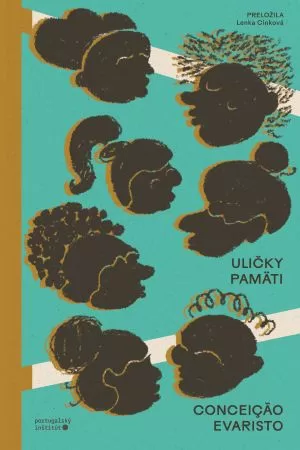
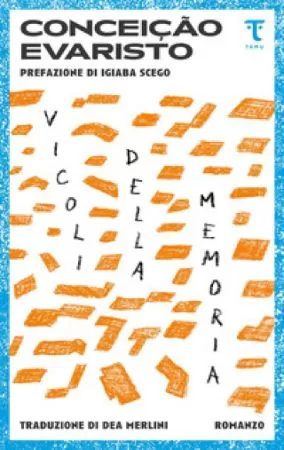
EVARISTO, Conceição. Becos da memória. Belo Horizonte: Mazza, 2006.
Aline Alves Arruda
Illustrated by Théo Crisóstomo
Translated by Shaina Thelen
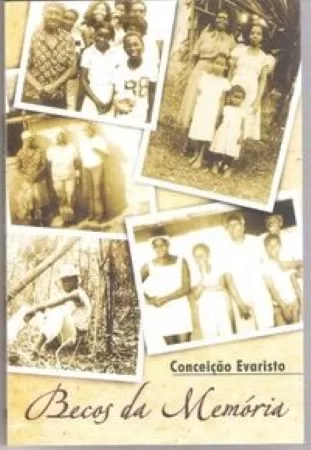
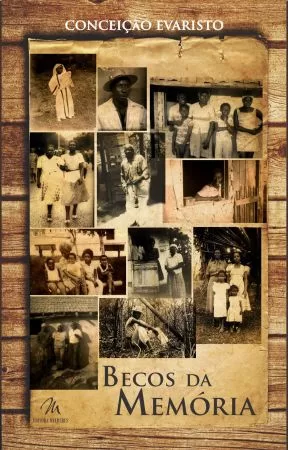
A member of the Minas Gerais Academy of Letters, Conceição Evaristo(Belo Horizonte, MG, 1946) is one of the most recognized contemporary Brazilian writers. Becos da Memória (Alleys of Memory) is her second published novel and the first she wrote. According to the author herself in the preface of the novel, the book was shelved for more than twenty years before its publication in 2006. Her first published book was Ponciá Vicêncio (translated by Paloma Martinez-Cruz, Host Publications) in 2003, also by the Mazza publishing house in Belo Horizonte. With a blend of testimony and fiction, in Becos da Memória the author returns to her childhood and early adolescence to tell the story of the lives and feelings of the residents of a favela that is being razed in the late 1960s. The residents are displaced, or desfavelizados — a term for people forced to leave a favela that is being demolished. This theme, therefore, besides appearing in both of the writer’s novels, is part of her biography. The cover of the first edition features photos from the author’s personal archive and of her family, confirming that her personal memory is intertwined with the memories of so many Brazilians and of the characters she fictionalized.
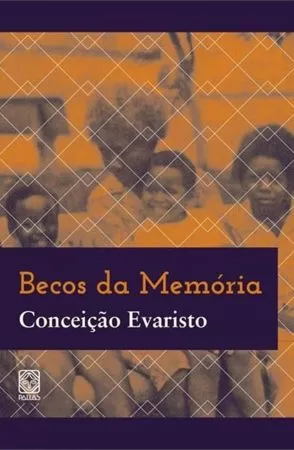
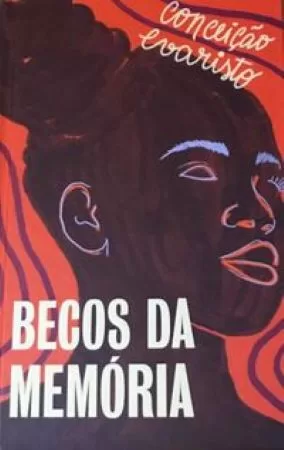
After being published by the Minas Gerais publishing house in 2006, the book was published by the now-defunct Florianópolis publisher Mulheres in 2013, and finally by Pallas publishing house in 2017. In addition to the two novels already listed, the author has also published Poemas de recordação e outros movimentos (Poems of Remembrance and other Movements) in 2008; the short story collection Insubmissas lágrimas de mulheres (Unsubmissive Tears of Women) in 2011, reissued in 2016; the award-winning Olhos d’água (Water Eyes) in 2014; a book of short stories and novellas Histórias de leves enganos e parecenças (Stories of Slight Misunderstandings and Resemblances) in 2016, reissued in 2017; the novella Canção para ninar menino grande (Lullaby for a Big Boy) in 2018, reissued in 2022; and most recently, the illustrated short story, Macabea, flor de mulungu (Macabea, Flower of Mulungu), published in 2023.
The plot of Becos da Memória intertwines various stories of residents of an unnamed favela that is about to be destroyed. Maria Nova, the 13-year old protagonist, transports the reader into the favela. Through her eyes, the lives of Afro-descendent people are narrated in a sensitive and poetic manner, as is typical in Conceição Evaristo’s literature. Characters such as Tio Totó, Bondade, Cida Cidoca, Ditinha, Vó Rita, and others, weave their memories, dreams, and perspectives into a kind of “patchwork quilt” of the community’s collective memory. We have, then, a collective novel, with a multiplicity of characters and an intermittent, discontinuous narrative that alternates between first — and third-person perspectives.
Becos da Memória is an excellent example of the concept escrevivência (a blend of “to write” and “experience”) created by Conceição Evaristo. The term encompasses the idea that the lived experiences of Black people in Brazil are fundamental to literary production. According to her, it would be “the writing of a body, of a condition, of a Black experience in Brazil”. By adopting the term, Evaristo highlights the need to include the historical, social, and cultural experiences of the Black community in literary production. She seeks to break away from stereotypes and prejudices, giving voice and visibility to the unique life experiences of Black individuals in Brazil. Escrevivência, therefore, goes beyond simply writing about the experience; it incorporates lived experience in an authentic and profound way, thus enriching literature with perspectives that were previously marginalized.
Maria Nova, the protagonist and narrator of the book, roams the alleys of the favela undergoing gentrification to collect the memories of its residents. The girl shares many of the author’s traits: a Black girl and daughter of a washerwoman, who spends her childhood in a favela, likes to write, and sees in writing a form of resistance to preserve her own memory and that of her people. In this escrevivência, Evaristo brings forth in her literature the Afro-descendent voices of the favelas — silenced for years — and allows the collective memory of the Afro-Brazilian diaspora to be told by a Black woman.
Reflecting on this blend of biography and fiction, Becos da Memória, as noted by researcher Luiz Henrique S. de Oliveira, breaks with the tradition of what Lejeune (1980) calls the “autobiographical pact.” According to the French theorist, the difference between an autobiography and a novel is the pact made between the reader and the author of the writing. For him, there is a tacit agreement between the author and the reader in which the author assumes the truthfulness of the narrated events as being from their own life. The reader, in turn, approaches the work with an expectation that they are accessing authentic information about the life of the author. What Oliveira means when he states that Conceição Evaristo, with this work, creates “a new autobiographical space” is that, although the name on the cover of the book is different than the name of the character who writes the memories of her neighbors, family, and friends, Conceição reveals herself through Maria Nova in an autobiographical way.
In Becos da memória it is also important to note the significance of space and the differences between the favela where characters like Vó Rita and Tio Totó lived and the one depicted in the literary fiction of writers such as Geovane Martins and Ferréz. From Carolina Maria de Jesus’s 1960 novel Quarto de despejo (Child of the Dark) and the favela where Maria Nova lives to contemporary Brazilian literature, much has changed in the reality of this space regarding drug trafficking, violence, the rise of militias, and the police’s treatment of residents. Unfortunately, what remains is the neglect of the predominantly Black population that resides there,whose young people are killed every day.
With her poetic writing and through her characters, Conceição Evaristo conveys to the reader the idea that the favela is also a home. Tio Totó tells Maria Nova that he does not want to move, that he has “lost his strength” and that his body “asks for the earth”. In the diasporic and wandering story of this Black character, descended from enslaved Africans, it is no longer possible to be forced to start over by those who repeatedly uproot them. And this is what Becos da memória brings to light: as subjects of their own history, owners of their memories and territories, the plurality of the Black population resists.
Further Reading
EVARISTO, Conceição (2007). Da grafia-desenho de minha mãe, um dos lugares de nascimento de minha escrita. In.: ALEXANDRE, Marcos Antônio (org.). Representações performáticas brasileiras: teorias, práticas e suas interfaces. Belo Horizonte: Mazza.
CRUZ, Cristina Jane (2016). Uma análise da personagem narradora em Becos da memória, de Conceição Evaristo. Dissertação (Mestrado em Literaturas de Língua Portuguesa) – Pontifícia Universidade Católica de Minas Gerais, Belo Horizonte.
LEJEUNE, Philippe (2008). O pacto autobiográfico: de Rousseau à internet. Tradução de Jovita Maria Gerheim Noronha e Maria Inês Coimbra Guedes; Organização de Jovita Maria Gerheim Noronha. Belo Horizonte: Editora UFMG.
MARINGOLO, Cátia Cristina Bocaiúva (2014). Ponciá Vicêncio e Becos da memória de Conceição Evaristo: construindo histórias por meio de retalhos de memória. Dissertação (Mestrado em Estudos Literários) – Universidade Estadual Paulista Júlio de Mesquita Filho, Faculdade de Ciências e Letras, Araraquara.
OLIVEIRA, Luiz Henrique Silva de. “Escrevivências”: rastros biográficos em Becos da memória, de Conceição Evaristo. Literafro. Disponível em: http://www.letras.ufmg.br/literafro/artigos/artigos-teorico-criticos/1732-luiz-henrique-silva-de-oliveira-escrevivencias-rastros-biograficos-em-becos-da-memoria-de-conceicao-evaristo. Acesso em: 16 fev. 2024.
Iconography