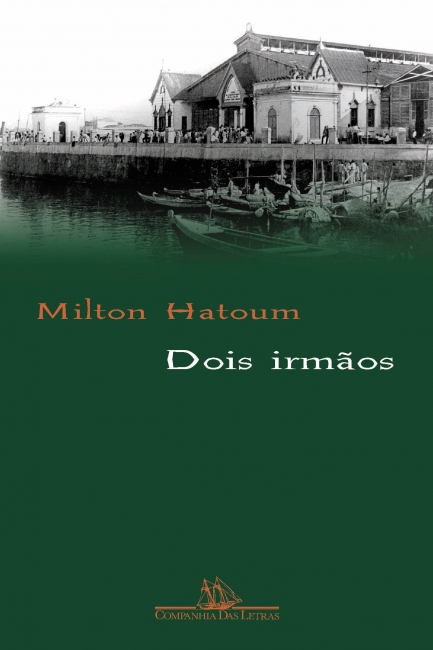
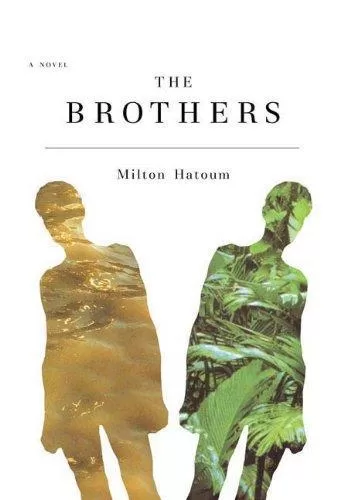
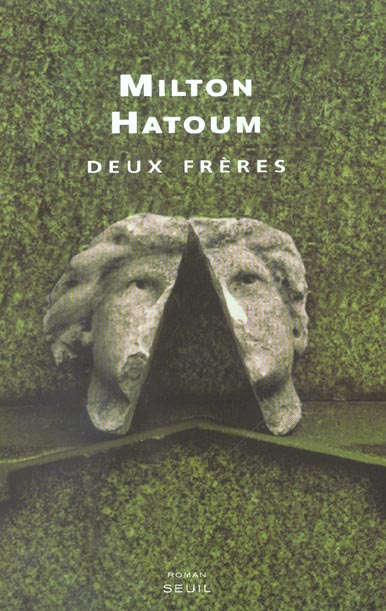
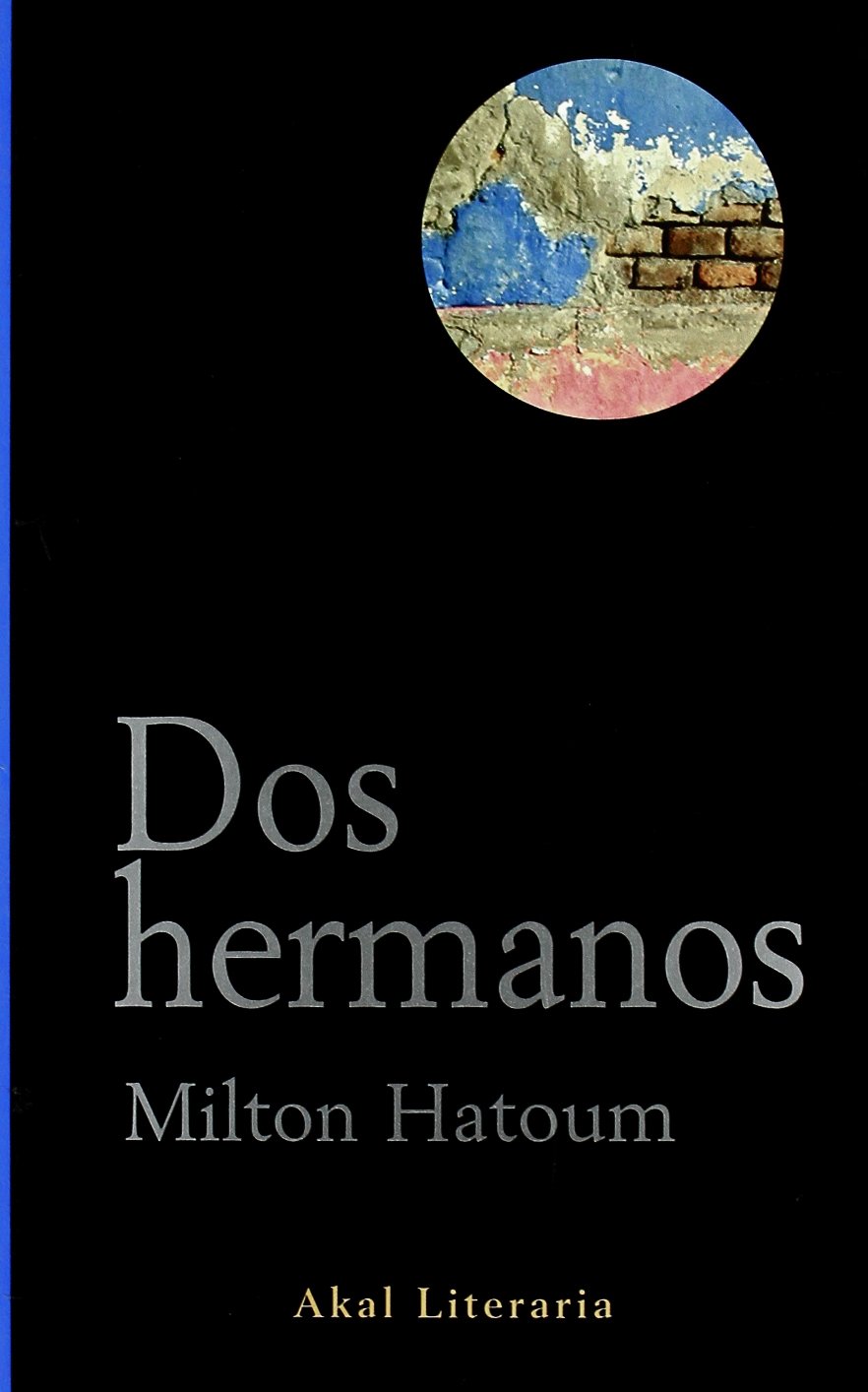
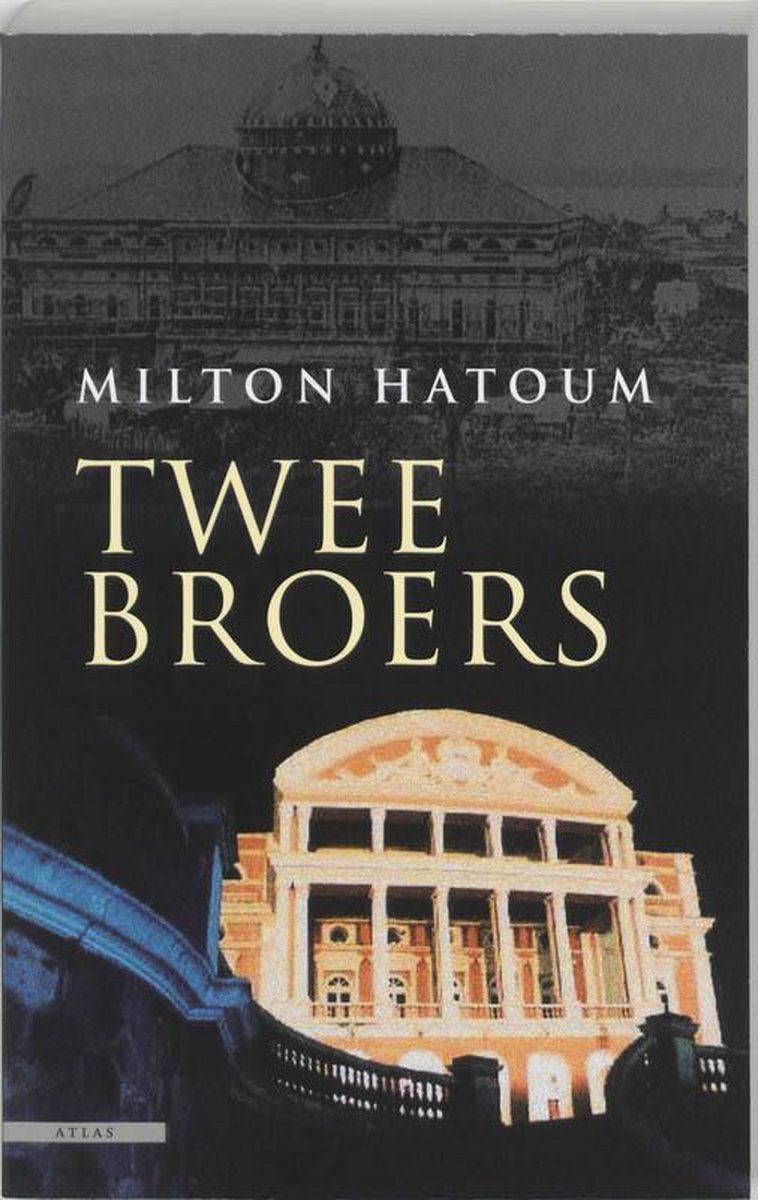
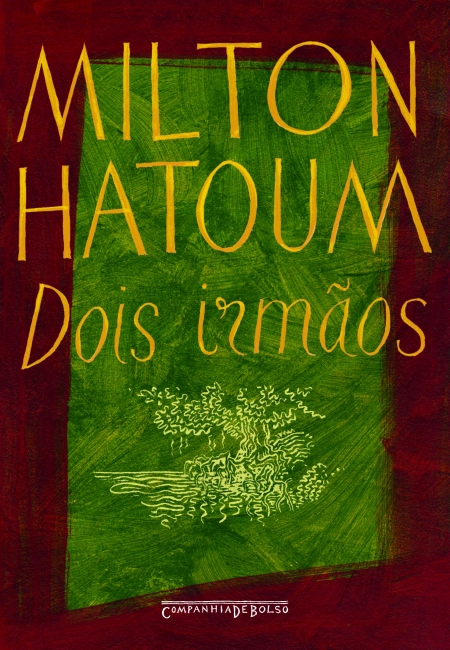
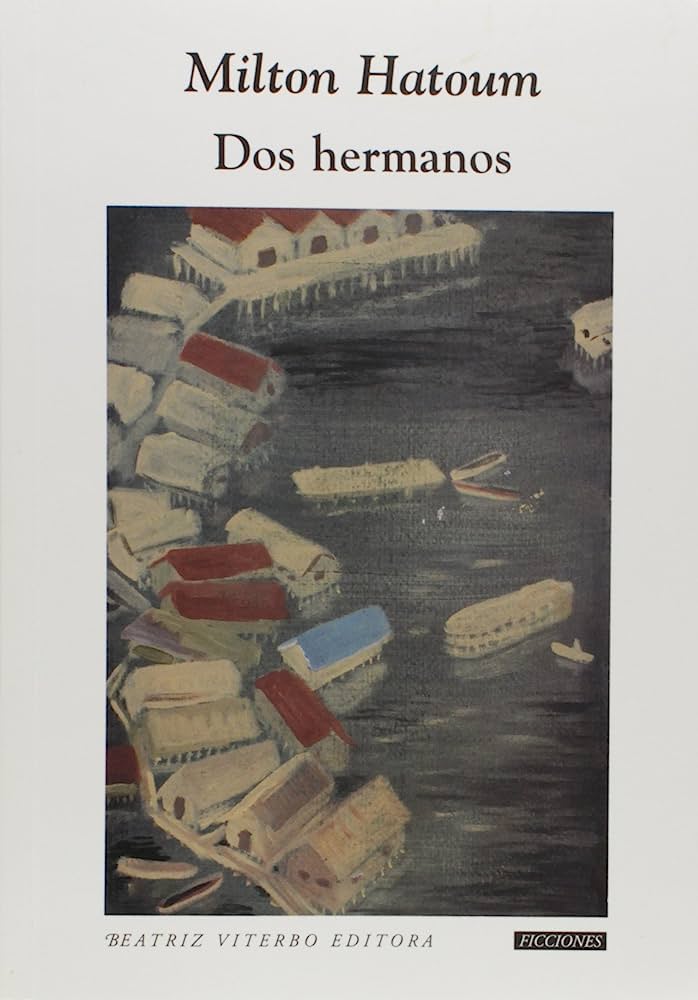
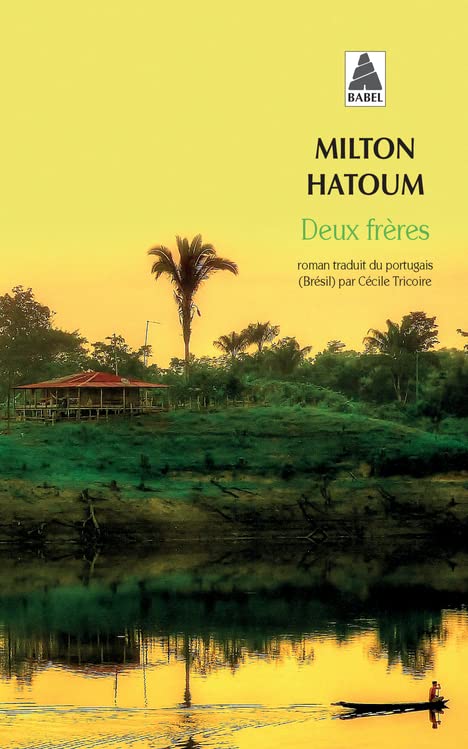
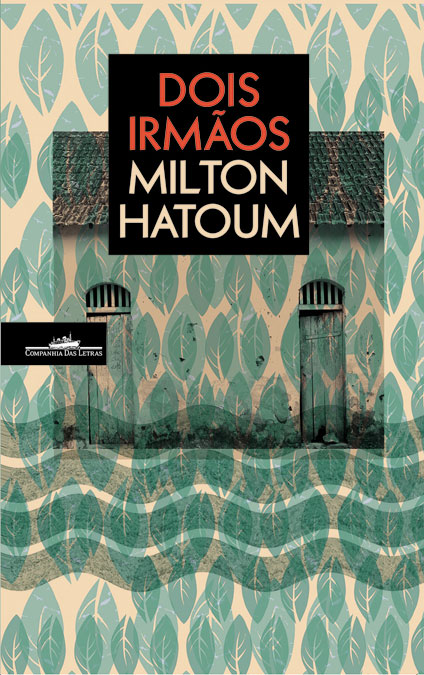
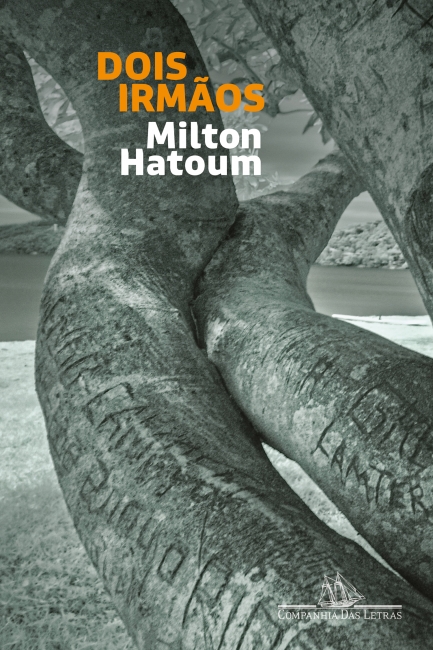
HATOUM, Milton. Dois irmãos. São Paulo: Companhia das Letras, 2000.
Samara Lima
Illustrated by Kleber Sales
Translated by Shaina Thelen
National literature is rich in examples of narratives that — through a multiplicity of themes, styles, literary forms, and voices — seek to represent reality and highlight the problems of the society in which we live. This is exactly what the novel Dois irmãos (The Brothers), by Milton Hatoum (Manaus, AM, 1952), published in 2000, demonstrates. The book ended the author’s 11-year silence on the contemporary literary scene after his debut with Relato de um Certo Oriente (Tale of a Certain Orient) in 1989.
A descendant of a Muslim Lebanese father and a Catholic Brazilian mother, Hatoum is acclaimed by both Brazilian and international critics, and his work has been studied and translated in various countries, such as the United States, France, and Italy. His works have been adapted for television and into comic book format, and he has received several awards, including the Jabuti Prize and the Portugal Telecom Prize for Literature.
The primary setting of many of his works is Manaus, the city where the author spent his childhood and youth before moving to Brasília to complete his studies, and later to São Paulo to pursue a degree in Architecture and Urban Planning at the University of São Paulo (USP). It is from this blend of lived experiences in these places that the author weaves his narratives. It is worth noting that the physical space of the cities receives a great deal of attention in his novels. This is evident in the detailed aesthetic descriptions of the buildings and in the explicit use of street names, as well as the manner in which the urban landscape influences and melds with the characters’ personalities.
Dois irmãos (The Brothers, translated by John Gledson; Farrar, Straus and Giroux) tells the story of a family of Lebanese immigrants who live in Manaus and work in commerce, spanning a period that goes from the postwar era until the end of the late 1970s. The central theme of the plot is the dispute between the twin brothers Yaqub and Omar, and their improbable reconciliation. The narrative centers on the characters of this family, shaped through a game of memories and forgetfulness evoked by the narrator — Nael, the son of one of the two brothers — and through fragments of stories told by Halim, his supposed grandfather, and Domingas, Nael’s mother, an orphaned indigenous woman who was bought from the church as a child to work for the family.
In an attempt to ease the conflict between the boys, Yaqub, at his father’s command and against his own will, leaves for Lebanon one year before the Second World War, at the age of thirteen, and returns to Manaus five years later. So the story begins with Yaqub’s return to his hometown and the reunion and cohabitation of the twins under the same roof. Nael presents to us, through a first-person narrative, the family’s dramas, the increasingly large domestic conflicts between the brothers, their love affairs, and their acts of revenge. In the same manner, we get to know Halim, father of the twins and loving husband, who repeatedly fails in his attempts to ease the tension between the brothers and to remedy Zana’s (the twins’ mother) favoritism toward Omar. Nael observes these events attentively, “from outside, and sometimes from a distance,” as he wants to recognize in one of the twins the identity of his father and reconstruct an unknown past that has tormented him since he was a child.
Yaqub’s return is shrouded in mystery, as he says nothing about his stay in Lebanon. At the same time, he appears to show great resentment for having been forcibly sent to the land of his ancestors. As time passes, the young man dedicates himself to his studies and travels to São Paulo, where he earns a degree in Civil Engineering and mysteriously marries a young woman — without inviting any family, only informing them of the celebration. Omar, on the other hand, is expelled from school and opts to follow a different path from his older brother, losing himself in drinking and scandalous nights.
At first, the plot seems to merely be about an Arab family and the enmity between brothers. However, a closer reading suggests that the story of an immigrant family may be related to the history of Manaus and, why not say, to the country itself.
First, we see Manaus affected by instability brought on by the war, with energy rationing, the family’s financial difficulties, and its residents struggling to survive. Later, we find ourselves in a city that still retains a provincial air in the post-war context, but with a sense of euphoria fueled by talk of economic acceleration through industrialization. The family’s business improves, but Halim keeps “one eye on a possible collapse.” In any case, during this time, “both Yaqub and Brazil itself seemed to have a promising future,” and it is precisely for this reason that the young man’s teacher, known as Father Bolislau, advises him to leave. Yaqub traveled to the big city in 1950, a decade marked by the developmentalist ideas of Juscelino Kubitschek’s (president of Brazil from 1956-1961) government. It is true that the dream of progress is soon unmasked and dissolves, as the citizens of the North experience nights of blackouts while Brasília is being inaugurated. The narrator of The Brothers grapples with how the economic development of the South-Central (geographic area including Southeastern, Southern, and Central-West regions of Brazil) contrasts with the decay of the North, leaving the marginalized without assistance. The floating city in the novel — which is also present in Cinzas do Norte (Ashes of the Amazon), the author’s third book — is built on the banks of the igarapés (small rivers or channels common in the Amazon), on top of logs. There, “former rubber tappers flooded in”— that is, the poorest residents. While Nael and Halim have a critical view of the changes that have occurred in Manaus, Yaqub defends its growth at any cost. This “modernizing” transformation is mirrored in the family business. The small store that was initially a gathering place for Halim and his friends to talk, gave way to a profitable enterprise.
The 1964 Military Coup also appears as a historical backdrop intertwined with the characters’ lives. The narrator recounts, for example, the occupation of Manaus, the movement of troops, the demolition of the floating city, and his fear of going out into the streets. Likewise, we read about the closure of theaters and schools, and the persecution of intellectuals. The brutality of the regime is addressed through the death of the character Antenor Laval, a French professor who encourages his students to think and a poet who writes about his anxieties and laughs at “the provincial politicians.” Laval is persecuted, publicly humiliated, imprisoned, and killed.
The violence and destruction of Manaus in the name of progress — highlighted by the description of the violence of the dictatorship period — also mark the beginning of the rupture of the family and the home: Halim’s disillusionment with both his family and the city, followed by his death; the store’s struggle to stay open; Zana’s grief, her delirium for reconciliation between her sons, and her death; the death of Domingas; Omar’s flight because of a fight with Yaqub; the sale of their house to an Indian businessman named Rochiram to settle a debt resulting from the rivalry between the brothers; and finally, the destruction of this same house, so full of memories, to make way for a business trading in imported goods.
It is possible to see, then, that the novel is not reduced to the mere dispute between the brothers or the opposition of their personalities, but discusses issues related to the construction of the identity of the narrator-character, Nael, through his view of the facts and the historical and social processes relevant to Brazil.
Milton Hatoum, like so many other contemporary authors, blurs the boundaries between fiction and reality to foster a critical look at our history. Reading The Brothers, more than twenty years after its publication, is both a pleasure and a warning, as we are still haunted by anti-democratic demonstrations that demand the return of the military regime and confront us with the challenge of building a national project in which the idea of a promising future goes hand in hand with a common destiny. Even though literature does not overthrow governments, as Hatoum stated in an interview with Focus Brasil, it can encourage greater caution so as not to repeat history.
Further Reading
BEAL, Sophia (2017). Espaços movediços e conflitantes na Manaus de Milton Hatoum. Teresa, São Paulo, n. 17, p. 71-86. Disponível em: https://www.revistas.usp.br/ teresa/article/view/114576. Acesso em: 19 fev. 2023.
MAURO, Ana Claudia Jacinto de (2018). O design de livros: análise de capas de Milton Hatoum. Dissertação (Mestrado em Letras) – Universidade Presbiteriana de Mackenzie, São Paulo.
OLIVEIRA, Maria Rita Berto de (2020). Uma análise do espaço romanesco em Dois irmãos, de Milton Hatoum. Curitiba: CRV.
SOUSA, Germana (2011). Entre o cedro e a seringueira: certos relatos de Milton Hatoum. Estudos de Literatura Brasileira Contemporânea, Brasília, n. 14, p. 23-37. Disponível em: https://periodicos.unb.br/index.php/estudos/article/view/8875. Acesso em: 20 fev. 2023.
HATOUM, Milton (2016). Entrevista com Milton Hatoum. [Entrevista concedida a] Julio Pimentel, Pinto, Francine Iegelski e Stefania Chiarelli. Intelligere – Revista de História Intelectual, São Paulo, v. 2, n. 2, p. 2-10. Disponível em: www.revistas.usp.br/revistaintelligere/article/download/120279/118467/226876. Acesso em: 20 fev. 2023.
Iconography